Overview
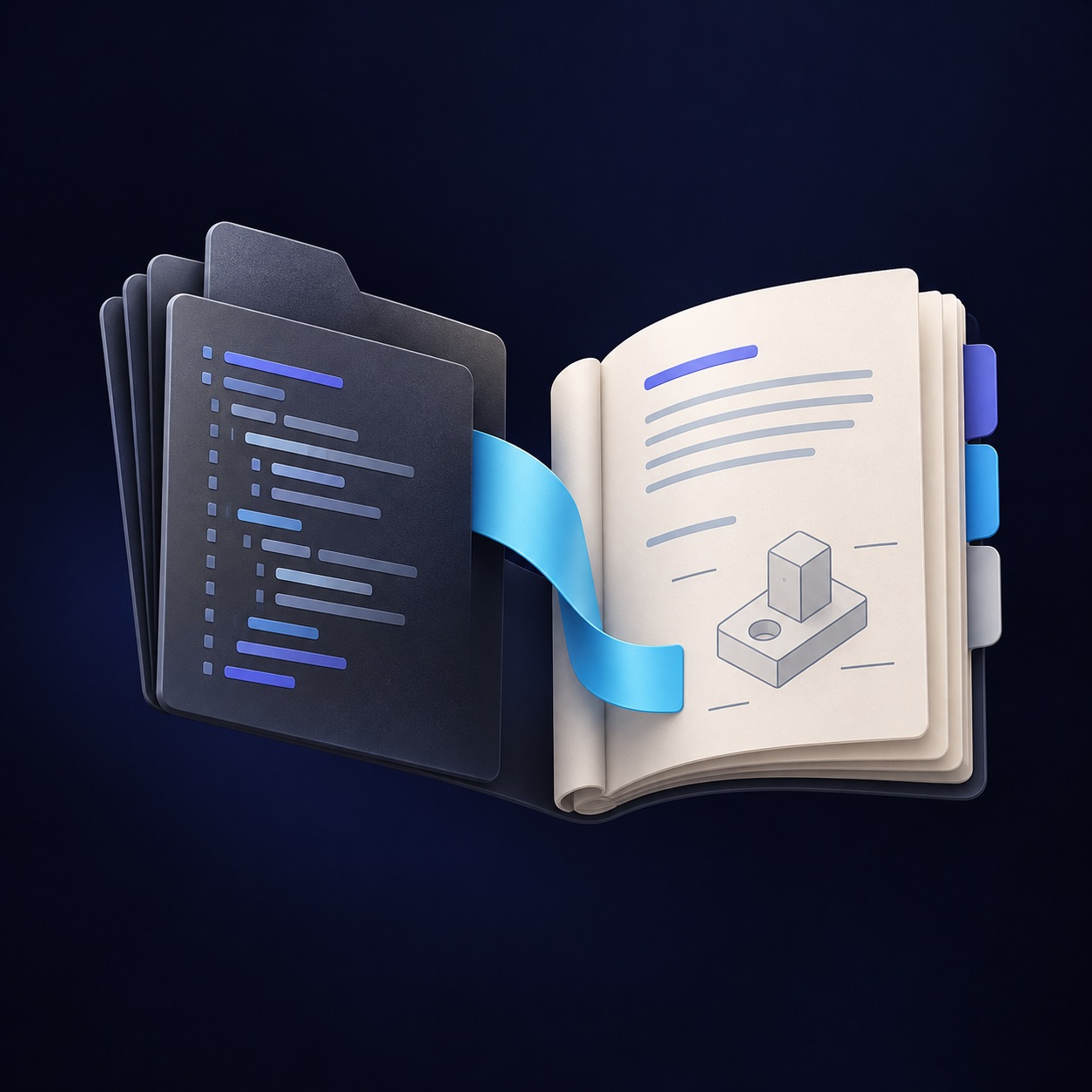
Reverse-engineer an existing codebase into a complete PRD: a global scan identifies the stack, page-by-page and endpoint-by-endpoint analysis follows, then structured documents are generated. Frontends covered: React, Vue, Angular, Svelte, Next.js, Nuxt, SvelteKit, Remix, Astro; backends: NestJS, Express, Django, FastAPI, Flask; fullstack projects merge pages and APIs into one document. Routes, components, state, models, enums and calls are evidenced one by one, and demo fixtures are distinguished from real integrations — mock data never gets written up as product truth.
Two audiences are served: product and partners read what each page does, while engineers or AI agents get enough detail to reconstruct fields, interactions and relationships — business language, zero business details omitted.
The delivery is a PRD package: per-page documents, an enum dictionary, an API inventory and model schemas, with a completeness check attached. The process only reads code and writes new documents; the analyzed project itself is never modified.
Where it helps
- Produce reconstruction-grade PRDs for undocumented internal systems
- On inheriting a legacy frontend, get pages and routes inventoried first
- Export a Django backend's models and permissions as a data dictionary
- Identify which endpoints are real integrations and which still mock
#prd#reverse#code#documentation
Examples
Examples describe the request and the shape of the expected deliverable; they are not completed run results.
01Example prompt
Reverse-engineer this Next.js fullstack repo into a PRD: merge pages and APIs into one document, tabulate enums separately, and mark every mock.
Expected output
A PRD package: per-page docs, an enum dictionary and an API inventory, with mock data called out separately.
02Example prompt
A new team takes over this Django project next week: produce a business-readable overview plus engineer-grade model and endpoint specs.
Expected output
A dual-audience set: feature meaning in business language, specs down to fields and permissions.
Requirements and limits
- Install platforms
- iOS: iOS · Android: Android
- Script runtime
- No script runtime (guidance and workflow)
- Minimum app version
- iOS: 1.7.59
Reviewed permission scope
iOS · Android
- Capabilities
- Read workspace filesWrite workspace files
- Review decision
- Approved
- Review stage
- Static content review
- Reviewed on
- 2026-10-28
Implementation and runtime details
- Adaptation stage
- frozen
iOS
- Capabilities
- Read workspace filesWrite workspace files
Android
- Capabilities
- Read workspace filesWrite workspace files
License and source
Source and trace details
License
MIT
MIT (root LICENSE)
The pinned skill subtree and shipped references were audited; full applicable license and per-file adaptation/asset notes are preserved under references/licenses/ and references/PROVENANCE.md.
- Source
- https://github.com/alirezarezvani/claude-skills
- Upstream path
- product-team/code-to-prd/skills/code-to-prd
- Source checked
- 2026-10-26
- Publisher
- JiangNanGenius
- Publication commit (retrieval)
- 25e07dbeeb6cc93c2fe83ddc72a34302cc40832a
- Audited source commit
- 84c524b6fb483e4cad94db076e7d9c9962966c19
- Signed catalog digest
- iOS 46196ba57ed7ea7f22085e74b113207f31193e820ab8983cf7a60eee953f2340 · Android 16de89d019e2057804a40f215485ccb09d5495a25864b34d681168eeaf8f9697
- Publication snapshot (UTC)
- 2026-10-31
Publication commit 25e07dbeeb, audited source 84c524b6fb; catalog digest iOS 46196ba57ed7… · Android 16de89d019e2….
Versions and status
Version records ship with the signed catalog; the target and released versions are shown below.
- Adaptation
- Ready
- Publication state
- Curated skills are available
- Released version
- 1.0.1